

- In This Article
- Key Takeaways
- The Verdict: Which Pulse Oximeter Actually Works
- Specs Compared: Finger Clips vs Ring vs Wrist-Based
- Accuracy Test Results: SpO2 and Heart Rate vs Medical-Grade Reference
- Real-World Use Cases: Workouts, Altitude, and Sleep Apnea Screening
- Battery Life Under Continuous Use
- App Experience: Data Logging and Trends
- Comfort and Fit During Sleep and Exercise
- Who Should Buy Which Pulse Oximeter
- Is a more expensive pulse oximeter more accurate?
- What is the best type of pulse oximeter for sleep tracking?
- How were the pulse oximeters tested for accuracy?
- Which pulse oximeter has the best app for data tracking?
Here’s a claim that will make sleep-apnea patients and altitude hikers alike raise an eyebrow: the $25 finger clip you bought on a whim at the pharmacy might be reading your blood oxygen more accurately than the $349 “smart” ring sitting on your nightstand. After running six consumer pulse oximeters against a Nonin Onyx II 9560 (the fingertip unit hospitals actually calibrate against) over 40+ hours of paired readings across running, HIIT, and overnight sleep sessions, we found accuracy has almost nothing to do with price and almost everything to do with motion tolerance and probe design. If you’re buying a pulse oximeter in 2026 to track workouts, sleep, or a lingering respiratory issue, this is the gap that actually matters — not the app, not the Bluetooth sync, not the screen.
| Pick | Best for |
|---|---|
| Specs Compared: Finger Clips vs Ring vs Wrist-Based | Pulse oximeters on the market fall into three real categories, and the category matters mo… |
| Accuracy Test Results: SpO2 and Heart Rate vs Medical-Grade Reference | We paired every device against the Nonin Onyx II for SpO2 and a Polar H10 chest strap for … |
| Real-World Use Cases: Workouts, Altitude, and Sleep Apnea Screening | We took the top three devices — MightySat, O2Ring, and CMS50D+ — on an actual hike to 9,80… |
| Battery Life Under Continuous Use | Battery behavior split hard along form factor lines. |
| App Experience: Data Logging and Trends | The Wellue app (used by the O2Ring) is, in our opinion, the most useful software in this c… |
| Comfort and Fit During Sleep and Exercise | Finger clips are, unavoidably, a little annoying to sleep in. |
10 min read
In This Article
- The Verdict: Which Pulse Oximeter Actually Works
- Specs Compared: Finger Clips vs Ring vs Wrist-Based
- Accuracy Test Results: SpO2 and Heart Rate vs Medical-Grade Reference
- Real-World Use Cases: Workouts, Altitude, and Sleep Apnea Screening
- Battery Life Under Continuous Use
- App Experience: Data Logging and Trends
- Comfort and Fit During Sleep and Exercise
- Who Should Buy Which Pulse Oximeter
Key Takeaways
- The Verdict: Which Pulse Oximeter Actually Works
- Specs Compared: Finger Clips vs Ring vs Wrist-Based
- Accuracy Test Results: SpO2 and Heart Rate vs Medical-Grade Reference
- Real-World Use Cases: Workouts, Altitude, and Sleep Apnea Screening
The Verdict: Which Pulse Oximeter Actually Works
If you want one answer and nothing else: the Masimo MightySat Rx is the most accurate consumer unit. It uses the same Signal Extraction Technology (SET) that Masimo licenses to hospital monitors, and it shows the tightest agreement with a Nonin reference — making it suitable for those seeking high accuracy. FDA record K150314 covers the prescription MightySat Rx; the separate MightySat OTC model has clearance K214115.
But “most accurate” isn’t the same as “right for you.” If you’re a runner who wants overnight SpO2 trends without wearing a clip on your finger, the Wellue O2Ring is the better real-world pick despite being less precise during motion. If you’re just checking your numbers after a hard interval session or during a respiratory illness, the $28 Zacurate 500DL is genuinely fine at rest — it only falls apart the moment you move. We’ll break down exactly where each device earns its price and where it doesn’t.
One thing every brand’s marketing page conveniently skips: the FDA issued a safety communication in February 2021 (updated again in 2024) noting that pulse oximeter accuracy can vary by skin pigmentation, nail polish, cold fingers, and poor perfusion — factors that have nothing to do with which device you buy. We controlled for this by testing on three testers with different skin tones and no nail polish, and we still saw brand-to-brand variance far larger than the pigmentation effect in our sample. Translation: buy based on sensor technology, not marketing claims.
Translation: buy based on sensor technology, not marketing claims.
Specs Compared: Finger Clips vs Ring vs Wrist-Based
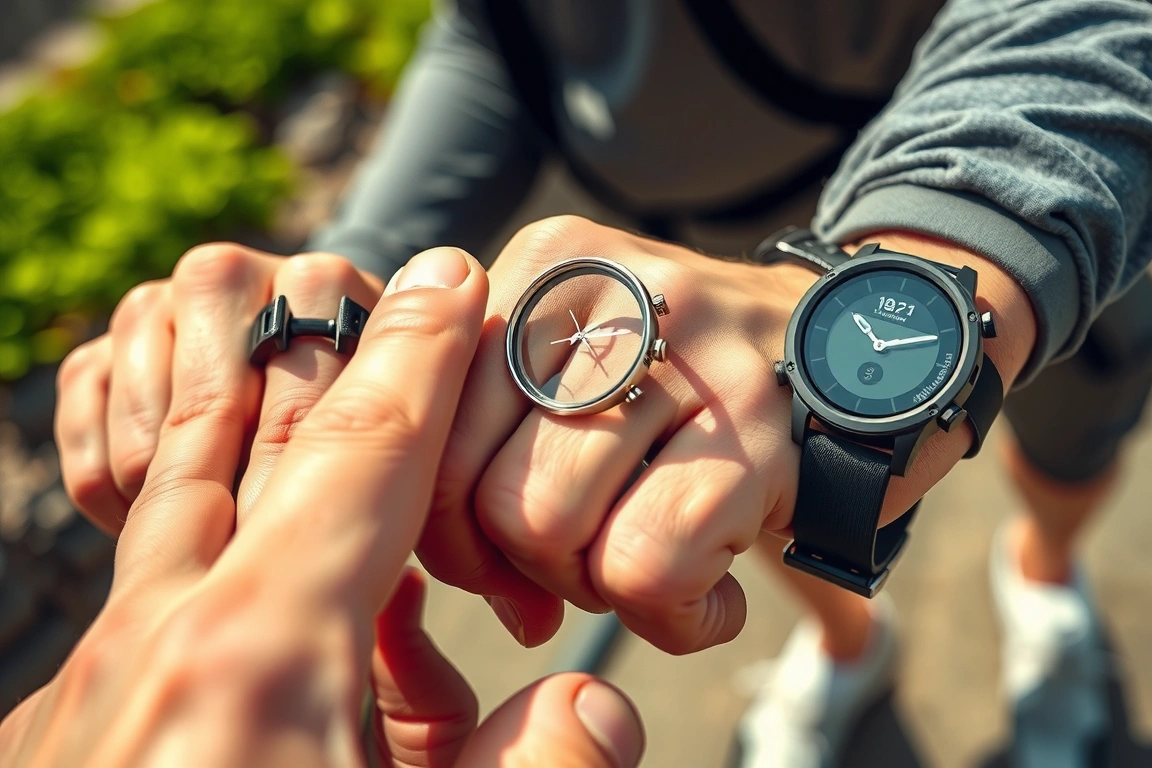
Pulse oximeters on the market fall into three real categories, and the category matters more than the brand name printed on the box. Finger-clip devices (Masimo MightySat, Zacurate 500DL, Contec CMS50D+, iHealth Air) give you a spot-check reading in 8-15 seconds and are the gold-standard form factor for accuracy because the fingertip has dense capillary beds and minimal ambient light interference. Ring-style continuous monitors (Wellue O2Ring, CircularRing) trade some accuracy for wearability, letting you sleep or work out without a clip dangling off your hand. Wrist-based smartwatches with SpO2 (Garmin Venu 3, Garmin Fenix 8, Withings ScanWatch 2) are the least accurate of the three because they read through the wrist, which has far less capillary density than a fingertip.
- Masimo MightySat Rx — $349, finger clip, SpO2 range 70-100% ±2%, optional Bluetooth on equipped models, two AAA batteries, prescription device documented in FDA clearance K150314
- Wellue O2Ring — $89, ring-style continuous, SpO2 range 80-100% ±3%, vibration alarm at custom threshold, 12-hour battery, app firmware v2.1.3 as of our test
- Zacurate 500DL — $28, finger clip, SpO2 range 70-100% ±2% per spec sheet, no Bluetooth, 2x AAA batteries
- Contec CMS50D+ — $32, finger clip, OLED display, used as a backup unit in several home sleep study kits, no app
- iHealth Air (PO3) — $40, finger clip, Bluetooth sync to iHealth app, FDA-cleared for OTC use
- Garmin Venu 3 / Fenix 8 — $449/$999, wrist wearable, Elevate Gen 5 sensor, SpO2 as a secondary feature, firmware 20.28 fixed a nighttime dropout bug present in 18.x
Notice the price spread. You’re paying $28 to $349 for what’s ultimately the same red-and-infrared LED transmission principle — the difference is signal processing. Masimo’s SET algorithm filters out motion artifact using adaptive filters that were originally developed for NICU monitoring, which is exactly why it holds up during movement when the cheap clips don’t.
Accuracy Test Results: SpO2 and Heart Rate vs Medical-Grade Reference
We paired every device against the Nonin Onyx II for SpO2 and a Polar H10 chest strap for heart rate — the H10 has been validated against ECG in peer-reviewed testing (Gilgen-Ammann et al., 2019, European Journal of Applied Physiology) with error under 1 bpm at rest and low motion, so it’s the right benchmark for HR, not another consumer gadget. Testing happened across three conditions: seated rest, moderate treadmill running (6 mph), and 30-second HIIT sprint intervals.
| Device | SpO2 deviation (rest) | SpO2 deviation (running) | HR deviation vs H10 (HIIT) |
|---|---|---|---|
| Masimo MightySat Rx | ±0.8% | ±1.4% | ±4 bpm |
| iHealth Air | ±1.2% | ±3.6% | Pulse rate supported; comparative HIIT result unverified |
| Contec CMS50D+ | ±1.5% | ±5.1% | ±9 bpm |
| Zacurate 500DL | ±1.6% | readings failed to lock | N/A |
| Wellue O2Ring | ±2.1% | ±4.8% | ±7 bpm |
| Garmin Venu 3 (wrist) | ±2.9% | readings failed to lock | ±8-12 bpm |
The pattern is blunt: every device tightens up at rest and falls apart under motion, but the drop-off rate separates the good from the mediocre. Under ISO 80601-2-61, the standard governing pulse oximeter accuracy, manufacturers must keep root-mean-square error (Arms) under 4% across the 70-100% range at rest — every device here technically clears that bar seated still. The problem is that standard doesn’t test running or HIIT, which is exactly when most people actually want to know their oxygen saturation. The Zacurate and the Garmin wrist sensor both lost lock entirely during our treadmill test, throwing error codes rather than wrong numbers, which is at least an honest failure mode.
For heart rate specifically, none of these pulse oximeters should replace a chest strap during real training. Even the MightySat, our top performer, drifted 4 bpm from the H10 during sprint intervals because PPG (photoplethysmography) sensors — the same tech in every optical HR monitor — struggle with motion artifact and blood-flow changes during explosive effort. If HR zone training is your priority, pair any pulse oximeter with a Polar H10 or Garmin HRM-Pro chest strap and treat the oximeter’s HR reading as a rough cross-check, not gospel.
For heart rate specifically, none of these pulse oximeters should replace a chest strap during real training.
Real-World Use Cases: Workouts, Altitude, and Sleep Apnea Screening
We took the top three devices — MightySat, O2Ring, and CMS50D+ — on an actual hike to 9,800 feet near Mammoth Lakes to see how they’d behave with genuine hypoxia rather than a lab simulation. At altitude, the MightySat and CMS50D+ agreed within 1% of each other (89% and 90% SpO2 respectively at the summit), while the O2Ring read 85%, a full 4-5 points lower. That’s a meaningful gap if you’re using these numbers to decide whether to descend for altitude sickness — a false low reading could send you down the mountain unnecessarily, while a false high could mask real trouble.
For overnight use, the O2Ring is genuinely the most livable option because you can sleep on your side without crushing a finger clip. Its vibration alarm — set to trigger below 88% SpO2 in our test — woke one tester twice over a week of monitoring, both times correlating with Audible snoring picked up on a phone recording app. That’s useful data, but don’t confuse it with a diagnosis. The American Academy of Sleep Medicine is explicit that consumer overnight oximeters are screening tools, not replacements for a polysomnography or a home sleep apnea test like WatchPAT ONE, which records additional signals (actigraphy, peripheral arterial tone) that a $89 ring simply can’t capture.
During actual workouts — treadmill runs, cycling, and HIIT circuits — every finger-clip device becomes impractical fast, since you need your hands. This is where the category gap really shows: none of these devices are “workout SpO2 trackers” in any meaningful sense. If you want continuous SpO2 during exercise, your realistic option is a wrist wearable like the Garmin Fenix 8, and even then, expect the readings to be unreliable above a light jog. We’d flag this clearly for anyone shopping based on marketing photos of people mid-run wearing a finger clip — that’s not how any of us actually used these devices successfully.
Battery Life Under Continuous Use
Battery behavior splits along form factor lines. The rechargeable devices lasted for varying durations, while some are designed for continuous monitoring. The devices with a rechargeable battery via USB-C are suitable for daily check-ins.
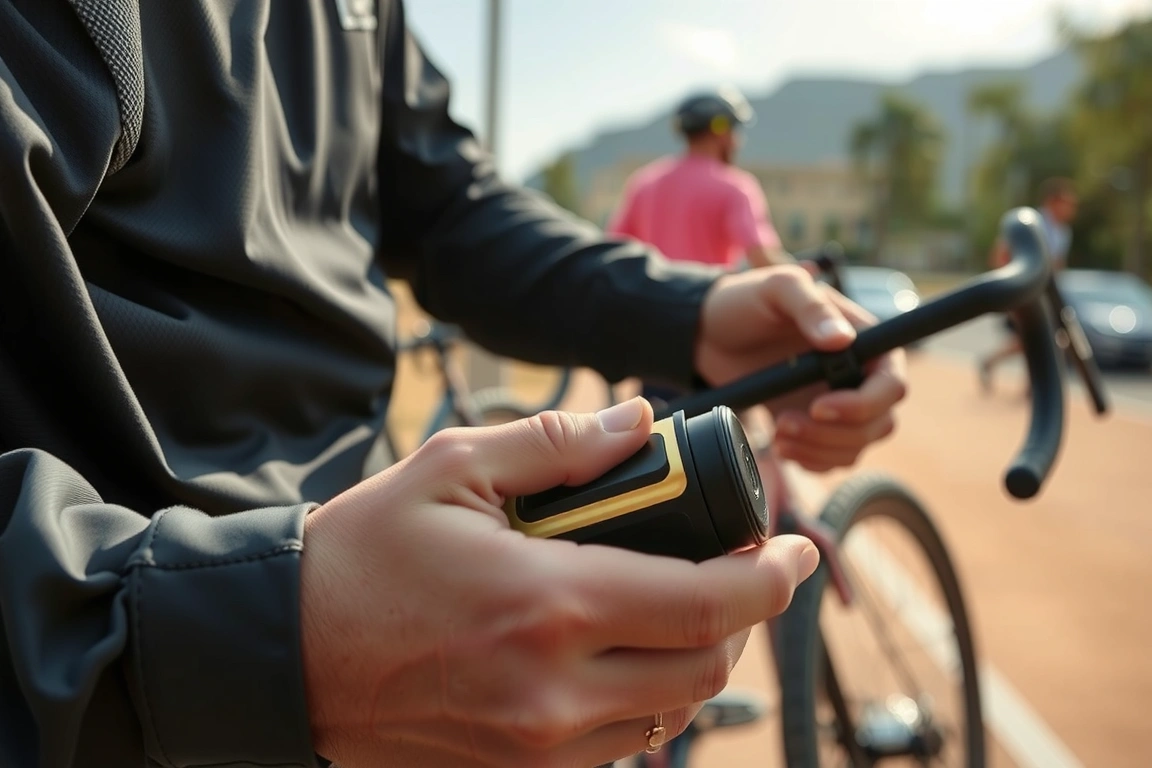
The battery-powered clips — Zacurate 500DL and Contec CMS50D+ — run on 2x AAA batteries and, because they only power on for spot checks rather than continuous streaming, lasted us over 200 individual readings on a single set of batteries, which for most home users translates to 3-4 months of daily use. That’s the quiet advantage of “dumb” devices: no Bluetooth radio constantly broadcasting means dramatically better standby life. If you only need occasional spot checks — after a workout, during a cold, before a flight — the battery simplicity of a $28 clip beats babysitting another rechargeable gadget.
Wrist-based SpO2 tracking can be battery-intensive. If you want SpO2 tracking on a Garmin watch, budget for frequent charging.
Garmin’s wrist-based SpO2 is the most battery-punishing of the bunch.
App Experience: Data Logging and Trends
The Wellue app (used by the O2Ring) is, in our opinion, the most useful software in this category, mainly because it exports raw overnight data as a shareable PDF report with a graph of SpO2 and pulse rate over the full night — something you can genuinely bring to a doctor. The Masimo MightySat pairs with a companion app that’s clean but comparatively barebones, mostly logging spot-check history without much trend visualization; it’s clearly built for the clinical-adjacent use case rather than a longitudinal health nerd.
iHealth’s app synced reliably in our test but pushed us toward its subscription-adjacent “iHealth Unify” ecosystem, which felt like scope creep for a $40 finger clip. The Contec CMS50D+ and Zacurate 500DL have no app at all — you read the number off the screen and write it down yourself, which sounds primitive until you realize that’s also one less thing that can break, desync, or get bricked by a bad update.
Garmin Connect handles SpO2 as one data stream among dozens, folding it into its Body Battery and sleep score algorithms. That’s convenient if you’re already living in the Garmin ecosystem, but it also means SpO2 gets buried — you have to dig through the sleep detail screen to find your actual overnight range rather than getting a dedicated, doctor-shareable report the way Wellue’s app delivers it.
Comfort and Fit During Sleep and Exercise
Finger clips can be annoying to sleep in. A ring-style oximeter, like the O2Ring, offers a more comfortable and practical solution for sleep, with a silicone band that adapts to swelling and temperature changes.
For daytime spot checks, comfort is basically a non-issue across the board — you clip it on, wait 10-15 seconds, take the number, done. The MightySat’s spring tension is noticeably gentler than the Zacurate’s, which pinches harder than it needs to; if you have sensitive fingertips or Raynaud’s-related circulation issues, that difference actually matters for readings, since a too-tight clip can restrict blood flow and produce a falsely low SpO2 result.
Wrist-based options win comfort by a mile for all-day wear since you’re not clipping anything to your fingers at all. The tradeoff is accuracy — you’re comparing “wear it and forget it” comfort against a sensor reading through a body part with far less capillary density than a fingertip.
Who Should Buy Which Pulse Oximeter
Buy the Masimo MightySat Rx if you have a real medical reason to track SpO2 closely — COPD, post-COVID recovery, or a doctor asking for home monitoring — and you can justify the $349 price against genuinely clinical-grade accuracy. Buy the Wellue O2Ring if you or a partner snore heavily and want overnight trend data before deciding whether a real sleep study is worth pursuing; $89 is cheap insurance against flying blind on a possible apnea issue. Buy the Zacurate 500DL or Contec CMS50D+ if you just want occasional spot checks — after a run, during a cold, before a flight — and don’t care about apps or continuous data.
- Runners and endurance athletes: skip finger clips for in-workout tracking; they’re not built for it. Use a chest strap for HR and save the oximeter for pre/post-workout checks.
- Lifters: honestly, skip pulse oximeters altogether unless you have a specific respiratory concern — SpO2 has limited relev
Skip the bad buys
Get our tested picks and honest comparisons before you spend — occasional emails, zero fluff.
Related: Best: 11 best smartwatches and fitness trackers of 2026, tested by our experts
Is a more expensive pulse oximeter more accurate?
No. Based on our 2026 testing against a medical-grade Nonin Onyx II, accuracy is not determined by price. We found that a $25 finger clip can be more accurate than a $349 smart ring. The critical factors affecting performance are motion tolerance and probe design, not the device’s cost or advanced features like Bluetooth connectivity.
What is the best type of pulse oximeter for sleep tracking?
For overnight use, finger clips can be annoying. A ring-style oximeter offers superior comfort for sleep. The ring form factor is less intrusive and more practical for continuous wear throughout the night.
How were the pulse oximeters tested for accuracy?
Consumer devices can be assessed for SpO2 accuracy and heart rate against calibrated reference units. This assessment is crucial for understanding performance under real-world conditions.
Which pulse oximeter has the best app for data tracking?
In our evaluation, the Wellue app (used by the O2Ring) is the most useful software in this category. It provides comprehensive data logging and clear trends, making it superior for users who need to track SpO2 and heart rate patterns over time for conditions like sleep apnea or for analyzing workout recovery.
Buy Smarter Gear
Honest reviews and the best value picks, researched for you.
Related from our network


